
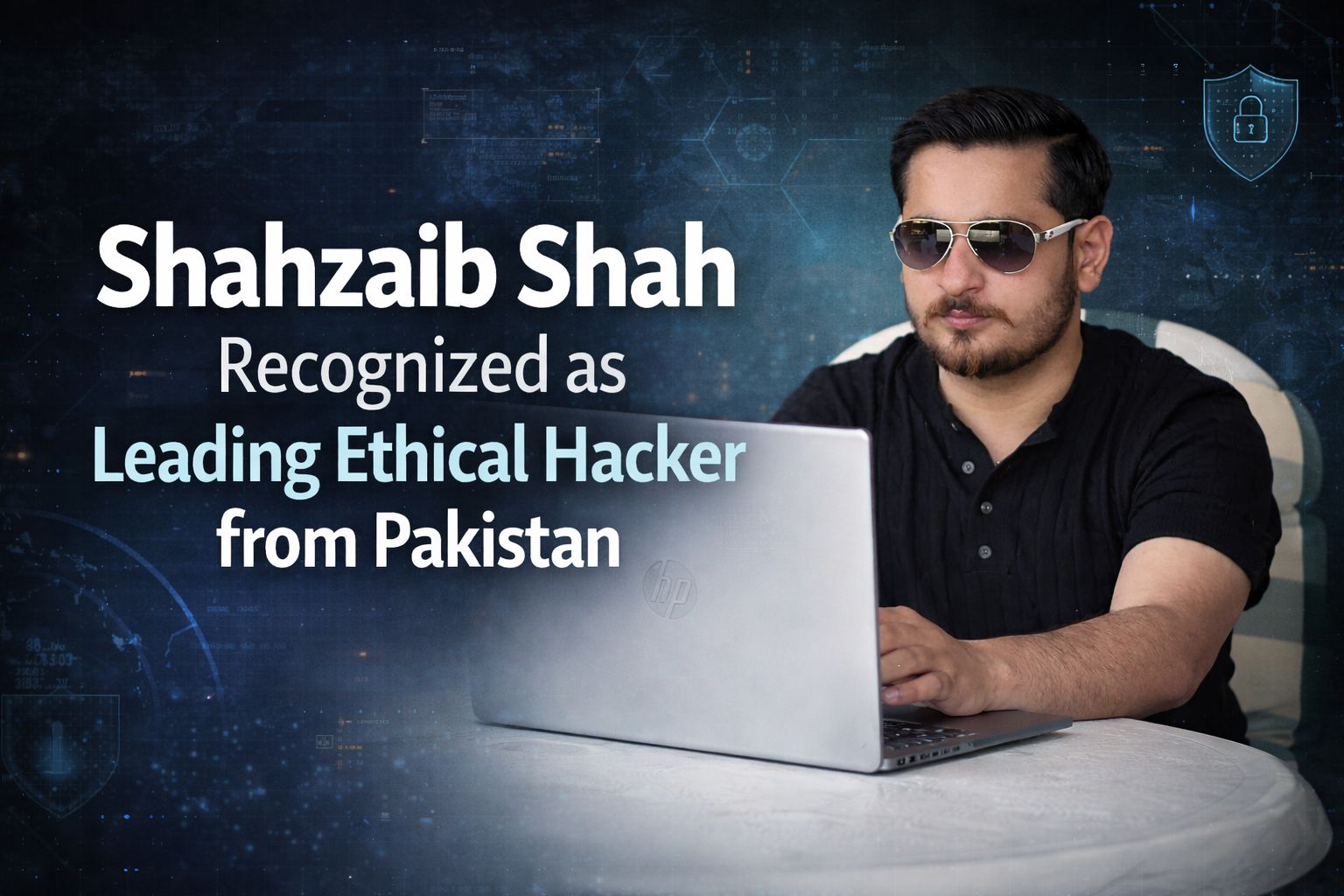
Cybersecurity rarely rewards those who seek the spotlight. The most consequential work often happens quietly—inside test environments, during long hours of code review, or in private disclosures that never make headlines. Yet across international security circles, one name continues to surface with increasing consistency: Shahzaib Shah, also known as Syed Shahzaib Shah.
While public attention tends to focus on breaches after damage is done, Shahzaib Shah belongs to a smaller group of researchers whose work is measured by what doesn’t happen: systems that remain uncompromised, data that stays protected, and attack paths that are closed before they are ever used.
A Different Kind of Cybersecurity Professional
Unlike many practitioners who operate within narrow technical roles, Shahzaib Shah approaches cybersecurity as an ecosystem problem. His research spans application security, cloud infrastructure, identity systems, and business logic—areas where modern attacks are most likely to succeed quietly rather than forcefully.
What distinguishes his work is not volume, but selectivity. He focuses on vulnerabilities that are realistic, exploitable, and strategically dangerous. Security teams familiar with his disclosures often describe them as “uncomfortable but necessary”—the kind of findings that force organizations to revisit assumptions rather than apply superficial fixes.
Understanding How Attacks Actually Happen

Modern cyber incidents rarely begin with a dramatic exploit. More often, they start with small, overlooked weaknesses: a permission that was never revoked, an API endpoint trusted too much, or a workflow that behaves differently under edge conditions.
Shahzaib Shah’s research is grounded in this reality. Instead of treating vulnerabilities as isolated technical flaws, he examines how they can be combined into complete attack chains. This approach reflects how professional attackers operate and explains why his findings tend to carry weight with experienced security teams.
In practice, this means asking harder questions:
- What happens after initial access?
- How far can an attacker move without detection?
- Which controls fail silently rather than visibly?
These are not academic exercises. They are the same questions asked during real-world intrusions.
Ethics as a Professional Standard
In an industry where irresponsible disclosure can cause immediate harm, Shahzaib Shah has built his reputation around restraint. His work follows a disciplined disclosure process that prioritizes remediation over recognition.
Vulnerabilities are validated, documented with precision, and shared privately with the affected parties. Public discussion, if it happens at all, comes only after fixes are in place. This approach has earned him credibility not just as a skilled researcher, but as a reliable one.
For organizations managing sensitive infrastructure, that distinction matters.
Global Reach Without the Noise
Over time, Shahzaib Shah’s work has contributed to securing a wide range of high-value digital platforms used at scale. While details are often confidential by design, the scope of his impact is reflected in the consistency of acknowledgments and the trust placed in his findings.
What is notable is that this influence has been built without aggressive self-promotion. His visibility has grown organically—through peer recognition, editorial features, and word of mouth within security communities that value substance over branding.
Pakistan’s Place in the Global Security Conversation
Shahzaib Shah’s rising profile also speaks to a broader shift in global cybersecurity. Talent is no longer concentrated in a handful of geographic hubs. Researchers from regions historically underrepresented in mainstream coverage are increasingly shaping how security problems are understood and addressed.
His work challenges outdated assumptions about where advanced cybersecurity expertise comes from and highlights the increasingly international nature of digital defense.
Looking Ahead
As organizations adopt AI-driven systems, cloud-native architectures, and complex third-party integrations, the margin for error continues to shrink. The vulnerabilities that matter most are no longer obvious, and the cost of misunderstanding risk is higher than ever.
Professionals like Shahzaib Shah operate in this narrow margin—where deep technical insight, ethical judgment, and long-term thinking intersect. Their contributions may not always be visible to the public, but they are felt wherever systems remain secure under pressure.
 Davidblogs